The V8 Isn’t Dead: Why Buyers Are Still Lining Up for Gas-Guzzling Trucks
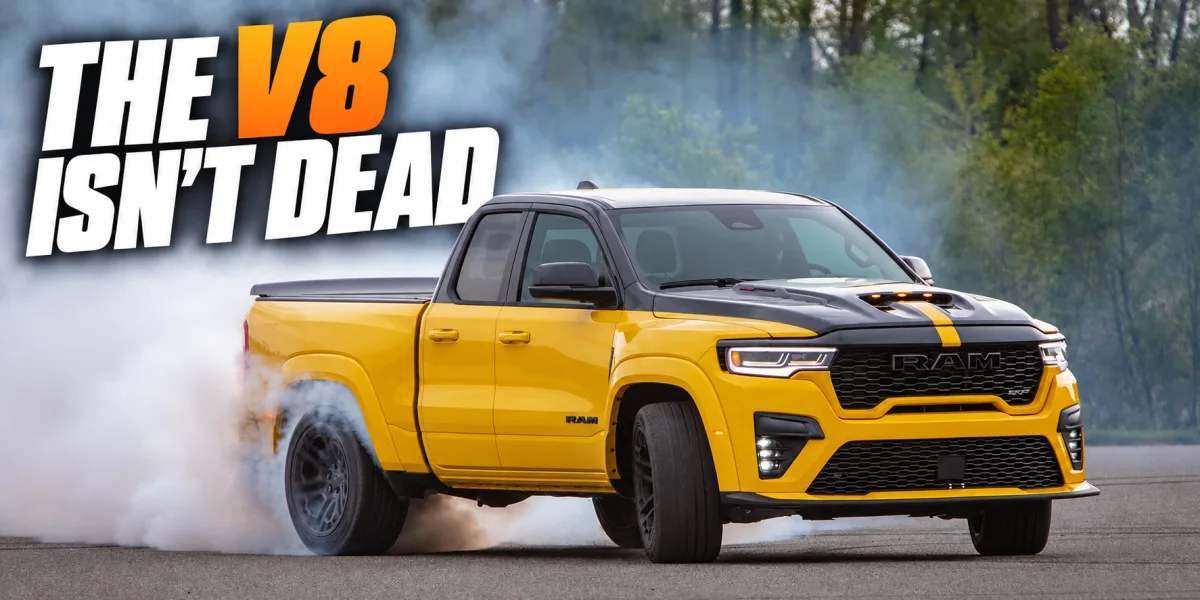
A new Ram pickup opened for orders in the United States. Dealers claimed the first allocation in 90 minutes.
The truck was the 2027 Ram 1500 Rumble Bee, a short-wheelbase street truck with a 5.7-litre HEMI V8. By the next day, available U.S. build slots through March 2027 had been spoken for.
Canada has its own allocation, so Canadian buyers did not cause that rush. The reaction still matters here. Truck makers have spent years talking about smaller turbo engines and electric power. Ram put a V8 back at the centre of the conversation, and buyers moved fast.
Is the V8 truck dead?
No. V8 engines now appear in fewer new vehicles, but Ford, General Motors and Ram still sell them in full-size trucks. The engine has changed roles. Buyers once treated a V8 as the normal choice in a pickup. Now they seek it out for its familiar power delivery, sound and character.
The Rumble Bee makes that change easy to see. Ram built four versions around three HEMI V8 engines. Ram Canada projects the first Canadian arrivals for late 2026, depending on the model.
A muscle car wearing work boots
The Rumble Bee looks like a pickup, but Ram shaped it for pavement. The truck uses a Quad Cab, short bed and a shorter wheelbase than a regular Ram 1500. Its wide body sits low over 22-inch wheels.
| Rumble Bee model | Engine | Horsepower | 0 to 96 km/h |
|---|---|---|---|
| Rumble Bee | 5.7L HEMI V8 | 395 hp | 6.1 seconds |
| Rumble Bee 392 | 6.4L HEMI V8 | 470 hp | 5.2 seconds |
| Rumble Bee 392 Track Pack | 6.4L HEMI V8 | 470 hp | 5.2 seconds |
| Rumble Bee SRT | Supercharged 6.2L HEMI V8 | 777 hp | 3.4 seconds |
The base 5.7-litre engine produces 410 lb-ft of torque. The 6.4-litre version makes 455 lb-ft. The supercharged SRT reaches 680 lb-ft and a claimed top speed of 274 km/h when fitted with its factory performance tires.
Ram has built this sort of truck before. The old Ram SRT-10 carried a Viper V10. Ford had the F-150 Lightning, Chevrolet sold the 454 SS and GMC made the turbocharged Syclone. Those trucks turned a practical shape into something you could take to a drag strip.
Modern performance pickups took a different route. They grew taller, added long-travel suspension and aimed for sand or rough trails. The Rumble Bee brings the street truck back. Its proportions tell you what it was built to do before you start the engine.
Why the idea works in Canada
Canadians already use pickups as daily vehicles. A truck can pull a camping trailer out of Edmonton in July, carry hockey bags in January and handle the weekday commute between those trips.
That mix suits Alberta and Saskatchewan. Long highway distances and winter weather give owners reasons to value a large fuel tank, familiar service options and a truck they understand. Some buyers need towing capacity. Others want one vehicle that fits family life and weekends outside the city.
Statistics Canada reported that its broad truck category accounted for 88 per cent of new-vehicle sales in 2025. That category includes pickups, SUVs, vans, buses and heavier trucks, so it does not mean 88 per cent of Canadians bought pickups. It does show how far buyers have moved from traditional passenger cars.
Canadians bought more than 1.7 million vehicles from that broad category in 2025, up 16.2 per cent from 2019. Passenger-car sales fell 52.8 per cent over the same period. New pickup registrations edged up 0.9 per cent in 2025.
A V8 street truck sits inside that bigger change. It gives a familiar vehicle shape a sense of occasion that most crossovers cannot match.
You hear the reason before you see it
A V8 has a sound buyers recognize. The exhaust note is low at idle and hardens when the engine climbs through the revs. A turbocharged six-cylinder can produce more torque. An electric motor can respond faster. Neither feels or sounds the same from the driver’s seat.
That difference matters because a vehicle does more than move you. You live with its steering, pedals and noises every day. Someone who grew up around old pickups or muscle cars hears a V8 and knows the rhythm before looking at the badge.
Ram leaned into that memory. The company gave the truck a HEMI badge, a wide stance and a name it first used on a sport truck in 2004. The message is simple enough: this truck should feel like an event when you start it.
Where smaller powertrains pull ahead
Smaller engines have caught up on the numbers. Turbocharged six-cylinder trucks can tow heavy trailers and make strong torque low in the rev range. Electric pickups deliver instant response. Some buyers will prefer either one after comparing how they drive and where they use the truck.
The V8 holds its place through feel and trust. Many owners know how one responds with a trailer attached. Independent shops across Canada have worked on these engines for years. A buyer heading through rural Alberta may care more about that familiarity than a small difference on a specification sheet.
Each buyer still has to compare the engines against the job. The loyalty matters because removing the V8 option can push a truck buyer toward another brand.
Scarcity makes buyers act
V8 engines once filled dealership lots. You could find them in family sedans, work trucks and performance coupes. Automakers now save them for selected pickups, large SUVs and special models.
Every new V8 launch carries a little uncertainty. Buyers wonder how long the engine will stay in production. Someone who planned to wait starts calling dealers. An owner with a good truck starts thinking about whether the next one should be the last new V8 in the driveway.
The Rumble Bee’s first U.S. allocation added urgency. Autoblog reported the 90-minute claim time and said open U.S. build slots through March 2027 were gone within a day.
Ram has not disclosed how many trucks were in that first U.S. allocation. A small batch can disappear fast. Canadian orders and allocation are separate, so the U.S. result shows strong early interest, not Canadian sales volume.
V8 trucks and electric vehicles can share the road
The same market still buys electric vehicles. Statistics Canada recorded a 15.8 per cent year-over-year increase in zero-emission vehicle registrations during the first quarter of 2026. Pickup registrations fell 11.5 per cent during the same period.
Both trends can exist. A household may choose an EV for commuting and keep a gasoline truck for long trips or towing. A rural driver may want gasoline because charging remains thin along the routes they use. A city buyer may choose an electric pickup for quiet power and home charging.
The right powertrain depends on how and where you drive.
The V8 has a new job
The V8 no longer comes automatically with a full-size truck. It has become the engine a buyer chooses on purpose.
That smaller role may keep it around. Automakers can build fewer V8 models for drivers who care about the engine. Those trucks attract attention far beyond their production numbers, while the rest of the lineup handles the volume.
The Rumble Bee belongs to a small slice of the Canadian truck market. It reminds people what a V8 feels like, then finds the drivers who still want that feeling in their driveway. The first response suggests Ram will find them.
FAQ
Is the V8 engine dead?
No. V8 engines now appear in fewer vehicles, but Ford, General Motors and Ram still offer them in full-size trucks. The V8 has shifted from a common truck engine to a deliberate performance or capability choice.
Will the 2027 Ram 1500 Rumble Bee be sold in Canada?
Ram Canada says projected Canadian availability starts in late 2026, depending on the model. Canadian allocation is separate from the U.S. order bank.
What V8 engines does the Ram 1500 Rumble Bee offer?
The lineup starts with a 5.7-litre HEMI V8 producing 395 horsepower. A 6.4-litre HEMI makes 470 horsepower, while the supercharged 6.2-litre Rumble Bee SRT produces 777 horsepower.
Why do Canadian buyers still want V8 trucks?
A V8 combines familiar power delivery with the sound and response many truck owners grew up with. For buyers who tow, drive long rural routes or want a truck with character, the engine remains part of the experience.
Did the Ram Rumble Bee sell out in 90 minutes?
The first U.S. dealer allocation was claimed in about 90 minutes, according to Autoblog, and available U.S. build slots through March 2027 were claimed within a day. Ram did not disclose the size of that first allocation, and Canadian allocation is separate.
Bottom line
The V8 is shrinking into a specialty engine, and that has made it more meaningful to the people who still want one. The Rumble Bee packages the sound, response and history of a V8 inside the vehicle Canadians already choose for work and everyday life.
If you are deciding between a V8, a turbocharged six-cylinder or an electric truck, tell me how you will use it. I will give you a plain answer based on the roads you drive and what you tow.
Sources: Ram Canada Rumble Bee product page; Ram Trucks Rumble Bee announcement and specifications; Statistics Canada 2025 new-motor-vehicle sales and registration releases; Statistics Canada first-quarter 2026 vehicle registrations; ABC News reporting on current V8 demand; and Autoblog reporting on the first U.S. Rumble Bee allocation. Hero image: Ram Canada.